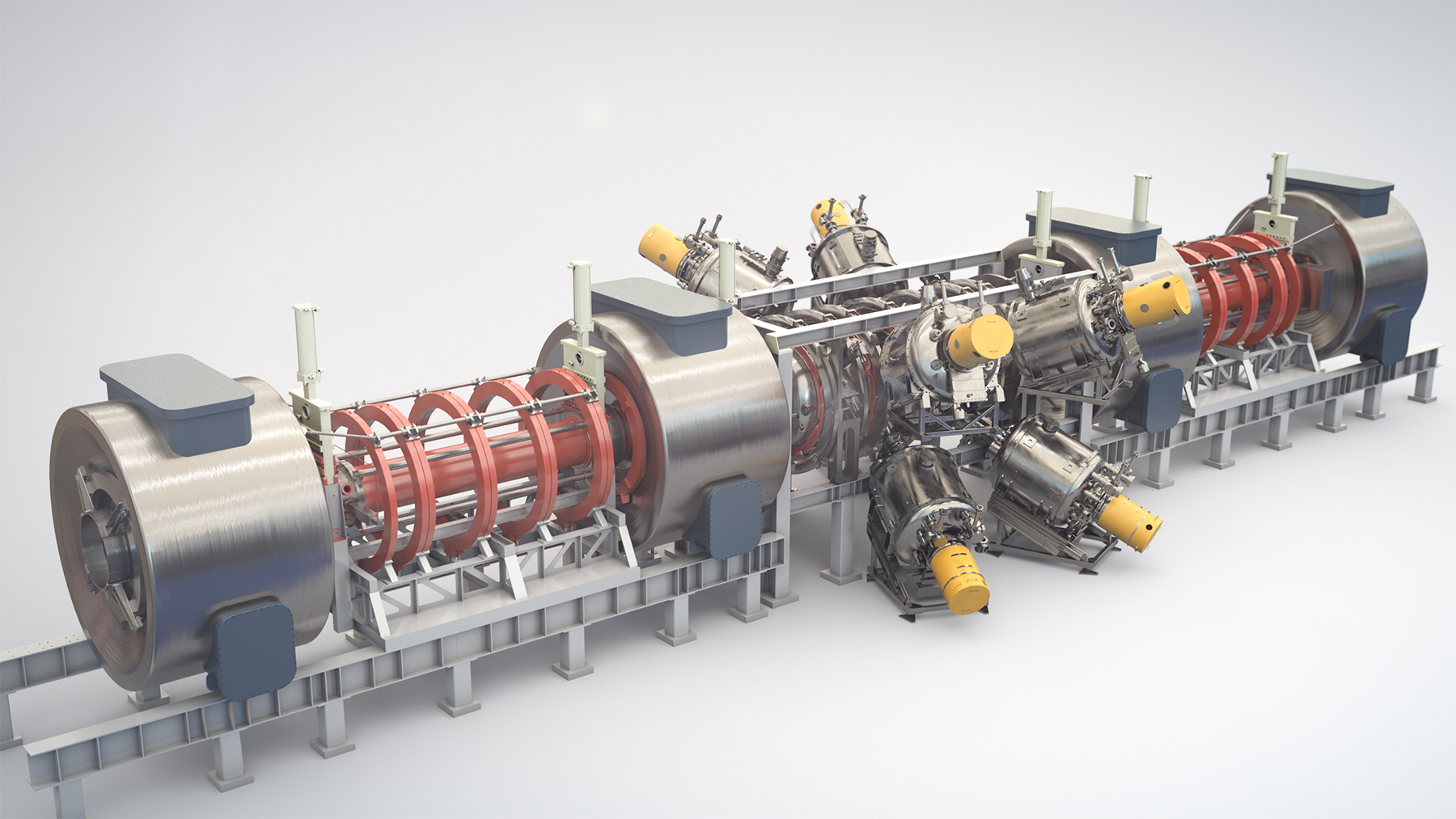
TAE Technologies: AI-Driven Fusion Breakthroughs Explained
According to recent industry research, AI-assisted acceleration can shorten experimental cycles in complex science by up to 60%. This explosive trend is reshaping fusion energy news and the pace of breakthroughs, including the work of TAE Technologies and its AI-driven fusion program. In this post, we unpack what is AI driven fusion, why fusion energy explained matters, and how clean energy AI technology is becoming a game changer for the fusion energy startup ecosystem.
Are you ready to ride a revolution in clean power that blends breakthrough science with machine intelligence? What if a single approach could trim weeks of experiments into days? By the end of this guide, you'll understand the essential trends, tools, and best practices propelling TAE Technologies fusion forward. Don’t miss out on the game-changing potential—the future of energy might depend on it. Ready to dive in?
Key Takeaways: Why AI is Redrawing the Fusion Landscape
- AI-enabled control and optimization are speeding up plasma confinement and stability experiments.
- Data-driven surrogate models reduce costs and accelerate fusion energy explained design cycles.
- Open architectures and ML toolchains from TensorFlow and PyTorch empower rapid experimentation.
1) Trend Spotlight: AI-Driven Fusion is Accelerating Discovery
Fusion energy news is dominated by demonstrations of smarter control, faster simulations, and better materials forecasting. The fusion field increasingly relies on AI to interpret enormous diagnostic datasets, optimize magnetic field configurations, and predict plasma behavior under varied conditions. This trend isn’t hypothetical—it's fueling real progress at research labs and fusion startups alike. ITER and other international efforts demonstrate how AI-enabled analytics unlock previously intractable questions.
Understanding artificial intelligence is crucial to grasp the shift from manual trial-and-error to data-driven discovery. The concept of fusion power as a practical energy source hinges on mastering complex, nonlinear plasma dynamics—now increasingly guided by intelligent models.
Pro Tip: Build a lightweight AI pilot project around a single plasma diagnostic (e.g., interferometry or Thomson scattering) to demonstrate rapid gains in insight and model fidelity. Ready to experiment?
Did you know that AI-enabled optimization can halve the time between experiment cycles? That’s the kind of revolutionary efficiency driving DOE Fusion Energy Sciences programs and TAE Technologies efforts? The synergy between AI and experimental physics is a proven accelerator for fusion energy explained concepts.
Ready to map this trend to your own strategy? Apply AI to a clearly defined plasma problem today.
2) How AI Accelerates Fusion Research: Core Strategies
Overview: The most impactful AI initiatives in fusion combine physics-informed models with data-driven learning. This hybrid approach yields robust predictions, safer operations, and faster path to validation.
- Closed-loop plasma control systems optimize magnetic confinement in real time, reducing instabilities. See how ITER and partner labs are pursuing AI-supported control loops.
- Surrogate modeling replaces expensive full-physics simulations with fast approximations that guide experimental design and parameter sweeps.
- Diagnostics interpretation uses ML to fuse multi-modal data (magnetic probes, spectroscopy, imaging) into actionable insights—accelerating learning cycles.
For foundational concepts, explore fusion power and AI fundamentals. The responsible application of AI in high-stakes physics requires careful validation, explainability, and safety protocols—principles championed by DOE FES.
Did You Know? Surrogate models in engineering have repeatedly delivered 10x to 100x speedups in design iterations—an explosive improvement that translates directly to fusion research timelines.
Practical question for startups: How will you balance experimental rigor with rapid AI-driven iteration? The answer lies in modular architectures, rigorous benchmarking, and close collaboration with national labs and industry partners. Stay proactive, stay curious.
Ready to implement these strategies? Start with a 90-day AI-playbook focused on one diagnostic and one confinement regime to prove value quickly.
3) The Tools Powering AI-Driven Fusion: Platforms, Models, and Data
Overview: The right toolchain turns theory into practice. Fusion labs increasingly deploy scalable ML frameworks, high-performance computing, and domain-specific workflows to accelerate discovery.
- ML platforms such as TensorFlow and PyTorch enable experimentation with neural nets, Gaussian processes, and reinforcement learning for plasma control and materials discovery.
- Simulation and HPC environments support large-scale plasma physics codes; consider integrating with open standards and workflow managers documented in modern tooling docs or scientific computing resources.
- Data pipelines and instrumentation require robust data governance; align with trusted sources like AI basics and fusion power.
Key reference for the AI toolkit in science: AI fundamentals, and for physics-informed ML approaches see specialized review articles in the fusion community. For practical examples, researchers also consult peer-reviewed platforms and collaborative projects within ITER.
WARNING: When integrating AI into fusion experiments, plan for rigorous validation and safety checks—this is not a black-box optimization, but a disciplined science collaboration.
Pro Tip: Maintain a living glossary that links physics terms to AI concepts (e.g., plasma confinement with reinforcement learning) to accelerate onboarding for new team members and potential investors. Documentation is your competitive edge.
4) What Is AI-Driven Fusion? A Clear Definition for the Clean Energy Era
At its core, AI-driven fusion combines physics-based models with data-driven insights to predict, control, and optimize fusion reactors. The goal is to reduce uncertainty, shorten iteration cycles, and improve reliability while maintaining safety and explainability. For readers new to the topic, AI provides the learning engine; fusion provides the physics; and together they offer a practical path toward scalable fusion energy explained for the real world.
Why does this matter for a fusion energy startup? Because speed, cost control, and credible results separate the leaders from the rest. TAE Technologies serves as a compelling case study in applying AI to experimental physics at scale.
Did You Know? The AI-driven fusion paradigm is not about replacing scientists—it's about empowering teams with smarter tools to make better decisions faster.
To deepen understanding, consult fusion power basics and the broader AI landscape overview on Wikipedia.
5) Practical Roadmap for Fusion Energy Startups
If you’re building or investing in a fusion energy startup, these steps offer a practical pathway to leverage AI for breakthrough results.
- Define a high-impact problem (e.g., real-time plasma stability or materials lifetime prediction) and set measurable goals.
- Assemble a data-centric culture with robust data governance, instrumentation, and logging. Link diagnostics to learning pipelines and versioned models.
- Adopt a staged ML strategy (surrogate models first, then physics-informed deep learning).
- Partner with established labs (DOE FES, national labs, or international projects) to validate results and gain credibility.
- Prioritize safety and explainability to meet regulatory and ethical standards while maintaining investor trust.
Recommended resources include broad overviews of AI foundations and fusion science: AI basics, fusion power, and DOE FES guidance.
Did You Know? A disciplined roadmap with realistic milestones can turn ambitious AI experiments into investor-ready milestones in under a year.
Micro-CTA: Want a checklist for your AI-fusion initiative? Start by mapping data sources to a minimal viable model, then expand iteratively as you validate results. Take action now.
6) The Bottom Line: Fusion Energy Explained and the Path Ahead
AI-driven fusion is not a single invention; it’s a method—combining data, physics, and intelligent automation to unlock safe, scalable energy. The field is rapidly evolving, with fusion energy news highlighting breakthroughs in reactor control, materials resilience, and optimization workflows. For a broader context, you can explore reading lists on AI and fusion power, plus industry reports from leading researchers and ITER.
In summary, the essential strategies for success are robust data pipelines, physics-informed ML, cross-disciplinary collaboration, and a relentless focus on safety and verification. The next wave of fusion energy explained breakthroughs will likely emerge from teams that fuse rigorous science with transformative AI.
Call to action: if you’re part of a fusion energy startup or simply curious about the field, begin applying these AI-driven approaches today. Monitor tech-focused fusion coverage and stay connected to ongoing AI in science developments. The clock is ticking—and the world is counting on proven, revolutionary progress.
Want visuals? Imagine a diagram showing data streams from diagnostics into a surrogate model, feeding a real-time control system that stabilizes plasma—then looping back through measurement to refine the model. Such graphics can illuminate the AI-driven fusion workflow for stakeholders and regulators alike.
If you’re looking for a concise primer, refer to foundational resources on AI and fusion power, plus enterprise tutorials on TensorFlow and PyTorch.